

In short: SEO vs Google Ads UAE: compare seven essential differences in cost, timing, control and results. Choose a practical approach for your business and budget.
📅 October 4, 2026 • ⏱️ 13 min read
SEO vs Google Ads UAE: 7 Essential Differences for Businesses
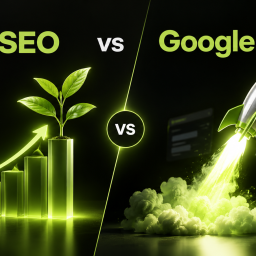
SEO and Google Ads solve different parts of the customer acquisition problem. SEO develops your ability to earn relevant organic visits; Google Ads buys access to advertising opportunities, subject to budget, eligibility and competition. For UAE businesses, the better choice depends on urgency, available demand, website quality and the value of a qualified customer.
This SEO vs Google Ads UAE guide compares costs, timing, sustainability and measurement. It focuses mainly on Google Search Ads, because search advertising is the closest paid comparison with organic search. Google Ads also includes other formats, and PPC describes a payment model used beyond Google.
In this guide
SEO vs Google Ads UAE: which should you choose?
Choose SEO when you can invest in a useful website and ongoing organic visibility. Consider Google Search Ads when you need to test or capture existing demand with a controlled paid campaign. Use both when their combined cost fits your economics and you can measure their separate contribution.
Neither choice compensates for an unclear offer, a broken enquiry form or slow sales follow-up. Before comparing channel proposals, establish which products or services you want to grow, the locations you serve and the characteristics of a qualified enquiry. A campaign that increases traffic without improving business outcomes is not automatically successful.
Location changes the practical decision. An appointment service in Abu Dhabi needs suitable enquiries within its coverage. A Dubai visitor experience may need advance bookings from overseas. An Al Ain supplier may serve a regional business market with a longer evaluation process. The same keyword list and budget structure will not suit all three.
What is SEO, and how does it generate traffic?
Search engine optimisation improves a website’s technical accessibility, content and usefulness so it can compete for relevant organic searches. Work can include resolving indexing problems, improving service pages, creating helpful resources and strengthening internal navigation.
Organic results are not purchased placements. A search engine decides which pages to show for each query, and positions can change as the website, competition and search systems change. There is no guaranteed ranking or fixed date when a new page will begin producing enquiries.
For a UAE business, useful SEO work may involve accurate location information, appropriate English and Arabic content, clearer service coverage and pages that answer genuine customer questions. Language versions should serve their readers properly; duplicated place-name pages are not a substitute for useful local information.
E-Media’s SEO services are a relevant destination for businesses assessing technical and content support. The commercial service page explains that offering; this guide helps you decide how organic work fits alongside advertising.
What is Google Ads, and how does it generate traffic?
Google Ads enables advertisers to compete for paid placements across supported campaign types. Search Ads can reach people expressing demand through a search. Advertisers control campaign inputs such as budget, messages, targeting and conversion goals, while actual delivery depends on the advertising system and competition.
With a cost-per-click arrangement, a click incurs advertising cost. That click is not a guaranteed lead or sale. The visitor still evaluates the offer, and the business still needs a relevant landing page and an effective response process.
Paid search can help test a service proposition or reach demand while organic work develops. It also requires active management: checking search terms, exclusions, conversion accuracy and lead quality. A campaign that runs without review can continue purchasing traffic that does not fit the business.
Do not assume that every Google Ads campaign behaves like Search. Video, display and other formats can influence discovery or consideration in different ways. A fair proposal should state which campaign types are included and how their outcomes will be assessed.
SEO versus PPC: a practical comparison
| Factor | SEO | Google Search Ads |
|---|---|---|
| Visibility | Earned organic search appearances. | Paid placements when eligible and competitive. |
| Main costs | Technical work, content, implementation and ongoing maintenance. | Media spend, management, creative and landing-page work. |
| Timing | Changes need implementation and search-engine processing; results vary. | Traffic can begin after setup, review and delivery; useful results still require evaluation. |
| When spending stops | Existing pages can continue attracting visits, but performance can deteriorate without upkeep. | New paid delivery stops when campaigns stop, although earlier visitors may return. |
| Control | Control over the website, not guaranteed positions. | Control over campaign settings and budgets, not guaranteed clicks or sales. |
| Intent | Can cover research, comparison and service searches. | Can focus on selected demand, subject to targeting and matching behaviour. |
| Best evaluation | Relevant visibility, organic enquiries and business outcomes over a suitable period. | Qualified acquisition cost and value, including more than media cost alone. |
Which costs more: SEO or Google Ads?
There is no universal cheaper option. SEO has delivery and maintenance costs even though organic clicks do not incur an advertising charge. Google Ads has media costs plus the work required to manage campaigns and convert visitors.
Compare the total scope. An SEO quotation that excludes development is not directly comparable with one that includes implementation. A paid search management fee that excludes landing pages and tracking is not the entire cost of starting advertising. Our digital marketing cost guide for the UAE explains how to separate those items.
Build the comparison around customer economics
Start with what the business can afford to pay to acquire a suitable customer. Consider contribution margin, sales effort and how reliably repeat purchases occur. Do not justify a high acquisition cost with assumed future revenue that the business has not observed.
Then work backwards from customers to qualified enquiries. If many enquiries are unsuitable, a low cost per form submission may disguise poor economics. Discuss the definition of a qualified lead before agreeing channel targets, and include management costs when comparing the overall programmes.
Separate setup from continuing expenditure
A technical repair or new service page may support both channels beyond the first reporting period. Media spend is consumed as advertising runs. Report these categories separately so a launch month with substantial setup work is not compared carelessly with a mature month.
Keep a consistent evaluation method. Changing the cost definition whenever one channel looks weaker makes the comparison unreliable. Record what is included, how conversions are assigned and which costs are shared across marketing activity.
How quickly can each channel produce results?
Google Ads can start delivering traffic after campaign setup and approval, but useful commercial evidence takes longer than the first click. SEO requires implementation and search-engine processing, and progress depends on the website’s starting point and competitive environment.
A new website with unclear services needs a different plan from an established site whose important pages already appear for relevant searches. In the second case, improving an existing page may be more useful than creating another article targeting the same intent.
For advertising, allow for the time required to check tracking, understand search traffic and observe the actual sales cycle. A B2B enquiry may become a sale well after the original campaign report. Judge recent leads at the appropriate stage instead of treating every open opportunity as a failure.
Ask providers to explain milestones they can control: completing the audit, implementing fixes, launching reviewed campaigns and reporting qualified enquiries. Treat fixed ranking dates or guaranteed sales promises cautiously because outcomes depend on factors beyond delivery alone.
Which approach is more sustainable?
SEO can build lasting website assets, while paid search offers adjustable access to demand. Sustainability comes from maintaining the underlying work and keeping acquisition costs commercially viable, rather than choosing a channel once and leaving it unattended.
An accurate service page may continue helping customers after its initial production cost, but it still needs updates when services, competitors or search behaviour change. Technical problems and obsolete information can erode performance.
Paid campaigns can be adjusted to capacity, geography and current offers. Their dependence on ongoing spend means you should understand what happens when budgets reduce. Avoid building a sales forecast that assumes advertising will deliver the same volume and cost indefinitely.
Maintaining more than one useful acquisition route can reduce reliance on any single source. That does not mean a small business should launch every channel immediately. Expand only when the website, team and budget can support the additional work.
How do intent and competition change the decision?
The most useful search is one that matches what you sell and the customer’s stage of evaluation. A broad informational query may attract readers, while a detailed service enquiry may indicate a nearer purchase. Both can matter, but they should not share an identical success measure.
Inspect the results customers actually see. Determine whether they are looking for a definition, a comparison, a local provider or a specific product. Build the appropriate page instead of forcing every query onto a general homepage.
Competition also affects the amount of work required. In organic search, stronger competing pages may demand more useful information and better implementation. In advertising, auction conditions influence delivery and cost. Neither a large content volume nor a larger bid automatically creates a better customer proposition.
For UAE campaigns, separate languages and locations where they create genuinely different needs. Do not assume that a successful English advertisement in Dubai will produce equivalent results for an Arabic audience in Abu Dhabi without adaptation and review.
When does SEO make the most sense?
- Your services are stable enough to justify detailed, maintained pages.
- Customers ask recurring questions that useful content can answer.
- The business can implement technical recommendations rather than only receive audits.
- You can support an evaluation period that reflects organic development and the sales cycle.
- You want to improve the website experience as well as search visibility.
SEO is particularly useful when the website lacks essential information. Better content can help organic visitors and improve the experience of people arriving from advertising, referrals or direct visits. If development work is needed, establish who owns it and how it will be delivered; E-Media’s website development services are a related resource.
When does Google Ads make the most sense?
- There is identifiable search demand for the offer.
- You need to test a focused proposition with a defined budget.
- Your landing page and enquiry process are ready.
- The business has capacity to respond to additional opportunities.
- You can evaluate lead quality and adjust the campaign.
Advertising is less useful when a business cannot explain its offer or respond to enquiries reliably. Fixing those issues may be the first investment. For Dubai-specific channel planning, see the guide to advertising a business in Dubai, which also covers social, local and offline activity.
When should a UAE business use both?
Use both when paid and organic work have clear roles and the combined programme fits the business. Paid search can test selected offers while SEO develops useful service and informational pages. Shared learning can improve messages and destinations without assuming identical performance.
For example, recurring questions from paid enquiries may reveal missing information on a service page. Organic search data may identify relevant themes worth evaluating for advertising. Keep the evidence specific: a high-volume query is not automatically a profitable paid keyword.
Google explicitly states that advertising does not improve organic search position. The benefit of using both comes from coordination and customer understanding, not from buying influence over organic rankings.
Three illustrative UAE business scenarios
An Abu Dhabi appointment-based service
Begin with accurate service details, location information and a working booking journey. A focused Search campaign may help test demand, while organic work improves the main service page and answers practical customer questions. Measure suitable bookings and attendance, not simply clicks on the booking button.
A Dubai experience booked before travel
Build pages that explain availability, inclusions and booking requirements. Campaigns may need to distinguish people already in Dubai from travellers researching overseas. Organic comparison content can support planning, while paid search can test selected booking intentions. Keep advertising promises consistent with actual availability.
An Al Ain supplier with a longer sales cycle
Detailed specifications and clear enquiry requirements may be the first priority. SEO can help prospects discover those resources, while paid search can test a narrower set of commercial queries. Track the path from qualified discussion to proposal and sale; immediate online purchases may not be the right outcome.
These examples illustrate decision-making. They are not E-Media case studies or predictions of performance.
How should you track SEO and paid search fairly?
Use consistent conversion definitions and connect website activity with the sales process. Distinguish organic search, paid search, brand enquiries and other sources wherever the available data allows. Check that duplicate events are not inflating reported results.
For each channel, review relevant visits, completed enquiries, qualified opportunities, acquired customers and the costs included in the calculation. Record attribution limits, returning customers and the delay between enquiry and sale. A WhatsApp click or download can be a useful intermediate action, but it should not automatically count as a customer.
Agree a review rhythm with marketing and sales. Identify what changed, what the evidence supports and what will be tested next. E-Media’s marketing strategy services can help connect channel decisions to broader business goals.
Frequently asked questions
Is SEO free compared with Google Ads?
No. Organic clicks do not incur an advertising charge, but research, content, technical work and maintenance have costs. Compare the full programme rather than a click price alone.
Does paying for Google Ads help organic rankings?
No. Paid advertising and organic ranking are separate. Advertising data may inform your content decisions, but advertising spend does not purchase a better organic position.
Can a new UAE business start with SEO only?
Yes, if its cash flow and acquisition plan allow for an uncertain development period. It still needs a credible website, implementation capacity and other ways to reach customers while organic visibility develops.
Should I stop SEO when Google Ads works?
Not automatically. Review what organic work contributes and which maintenance remains necessary. A successful advertising campaign does not remove the need for accurate, accessible website content.
Is PPC the same as Google Ads?
No. PPC means pay per click and is used across advertising platforms. Google Ads is a platform with multiple campaign types and bidding arrangements. Specify the actual campaign scope when comparing proposals.
What if neither channel produces good leads?
Review the offer, targeting, website, tracking and response process together. Increasing spend or publishing more articles may not help if customers misunderstand the service or cannot complete an enquiry.
Choose a channel plan you can measure
The practical answer to SEO vs Google Ads UAE is to give each channel a defined commercial purpose. Establish customer economics, fix the destination and evaluate qualified outcomes. E-Media’s digital marketing services bring the relevant website and marketing disciplines into that discussion without treating either channel as a universal answer.